> For the complete documentation index, see [llms.txt](https://docs.logilica.com/llms.txt). Markdown versions of documentation pages are available by appending `.md` to page URLs; this page is available as [Markdown](https://docs.logilica.com/integration/connecting-tools.md).
# Connecting Tools
Logilica ingests data from common DevOps and Platform Engineering products and creates out-of-the-box metrics, dashboards and reports.
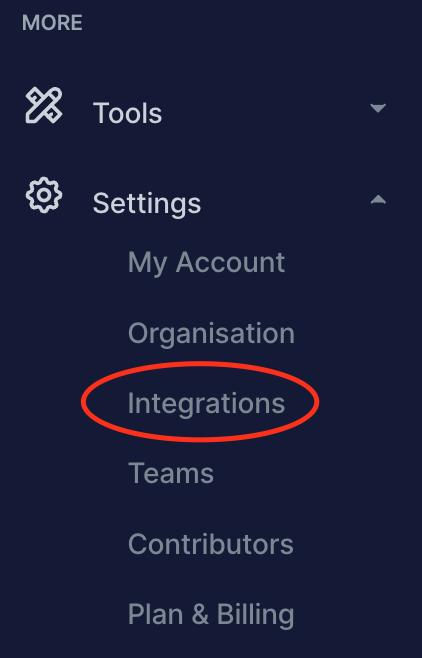
To connect your data sources, navigate on the sidebar to **Settings -> Integrations**.
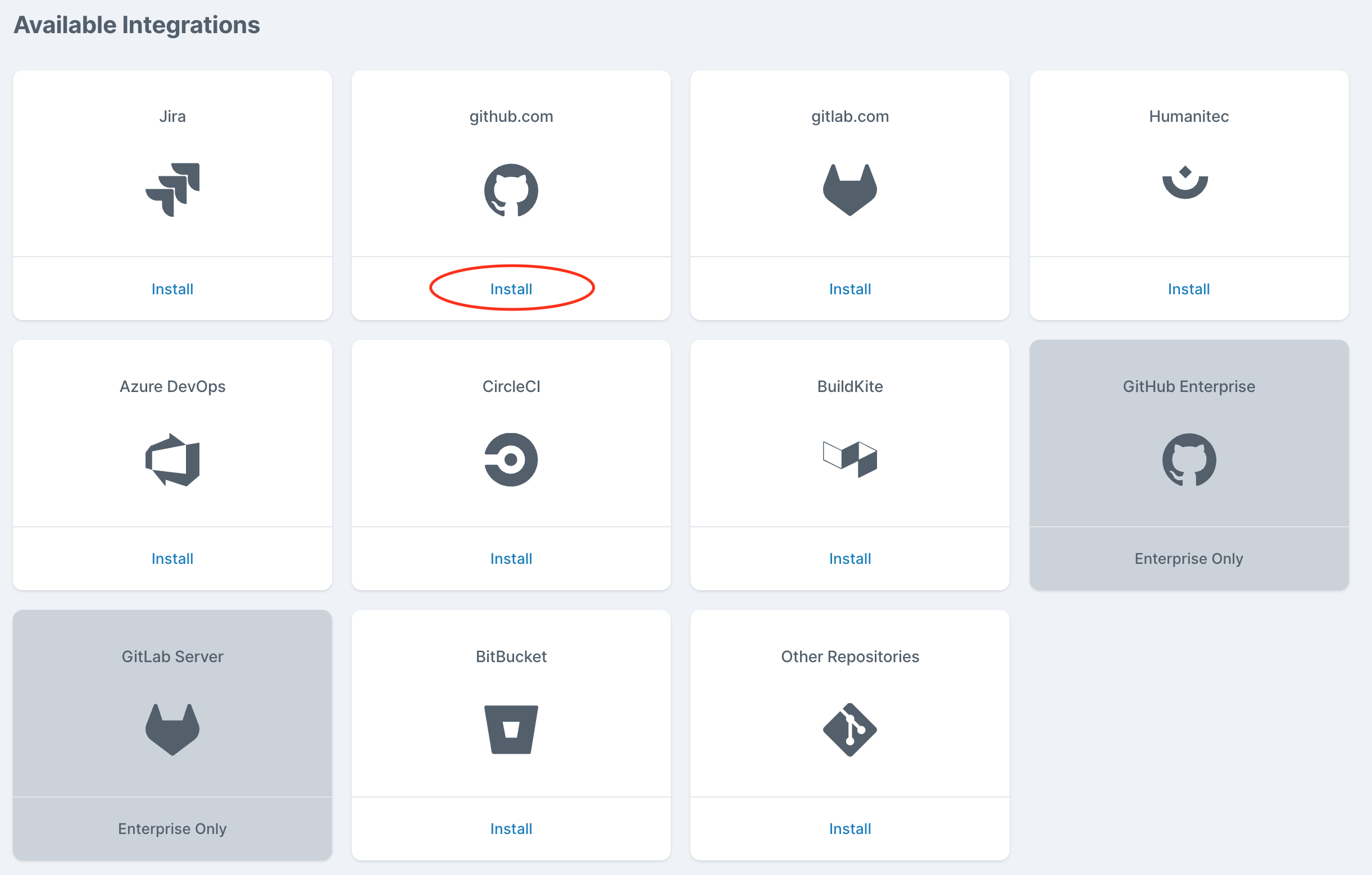
From there, select the data source you want to connect. Click **Install** to start the integration process. You will need to authenticate and allow Logilica to access the relevant metadata.
## Supported Connectors
Each connector has its own page covering authentication, exactly what data is imported, how it is mapped into Logilica's model, and the configuration a customer needs to get right. Select a platform below for the detail.
### Source Code Management
| Platform | Authentication | Data Imported |
| ----------------------------------------------------------------------------- | ------------------------------------ | ---------------------------------------------------------------------------------------------------------------- |
| [**GitHub**](/integration/connecting-tools/github.md) | OAuth or Personal Access Token (PAT) | Pull requests, commits, PR reviews and comments, PR state (open/merged/closed), releases, contributor identities |
| [**GitHub Apps**](/integration/connecting-tools/github.md) | GitHub App installation | Same as GitHub PAT — supports enterprise and self-hosted GitHub via custom URL |
| [**GitLab**](/integration/connecting-tools/gitlab.md) (cloud and self-hosted) | Personal Access Token | Merge requests, commits, MR discussions/notes, approvals, releases, contributor identities |
| [**Azure DevOps**](/integration/connecting-tools/azure-devops.md) | OAuth | Pull requests, commits, PR reviews and comments, PR state |
| [**Bitbucket**](/integration/connecting-tools/bitbucket.md) | OAuth | Pull requests, commits, PR reviews and comments, PR state |
All code connectors also import **contributor identities** (name, email, username) for identity resolution and team assignment. Logilica also links pull requests to planning tickets — see [Linking Pull Requests and Tickets](/integration/linking-pull-requests-and-tickets.md).
### Issue Tracking / Project Management
| Platform | Authentication | Data Imported |
| ------------------------------------------------------------------------------- | ----------------------------- | ------------------------------------------------------------------------------------------------------------------------------------------------------------- |
| [**Jira**](/integration/connecting-tools/jira.md) (Cloud and Server 8.x+) | OAuth or API Token | Issues, sprints, epics, issue events (created/assigned/in-progress/resolved), story points, custom fields, labels, issue type hierarchy, assignees, reporters |
| [**Azure DevOps Boards**](/integration/connecting-tools/azure-devops-boards.md) | Personal Access Token | Work items, iterations (sprints), custom fields, work item type icons, assignees |
| [**GitLab Issues**](/integration/connecting-tools/gitlab-issues.md) | Same as GitLab code connector | Issues, epics, milestones/iterations, labels, assignees |
| [**GitHub Projects**](/integration/connecting-tools/github-projects.md) | Same as GitHub code connector | GitHub Projects v2 items, custom fields (priority, story points, sprint), issue events, parent/sub-issue relationships |
| [**YouTrack**](/integration/connecting-tools/youtrack.md) | Permanent Token | Issues, sprints, state history, assignee events, custom fields, labels, story points, issue type hierarchy |
### CI/CD
| Platform | How It Connects | Data Imported |
| ------------------------------------------------------------------------- | ----------------------------------------------------- | -------------------------------------------------------------- |
| [**GitHub Actions**](/integration/connecting-tools/github-actions.md) | Enabled via the GitHub/GitHub Apps connector settings | Workflow runs, jobs, steps, build status, start/end timestamps |
| [**GitLab Pipelines**](/integration/connecting-tools/gitlab-pipelines.md) | Enabled via the GitLab connector settings | Pipelines, stages, jobs, status, timestamps |
| [**CircleCI**](/integration/connecting-tools/circleci.md) | API Token | Builds, stages, jobs, status |
| [**Buildkite**](/integration/connecting-tools/buildkite.md) | API Token | Pipelines, build stages, status |
CI/CD data feeds the [Build](/metrics-and-reports/build.md) dashboards and is required for [DORA metrics](/configuration/dora-configuration.md).
### Code Coverage
| Platform | Authentication | Data Imported |
| ------------------------------------------------------- | -------------- | --------------------------------------------------------------------------------------------------------------------- |
| [**Codecov**](/integration/connecting-tools/codecov.md) | API Token | Per-commit coverage data, individual test results (pass/fail/skip/error), test duration, branch, contributor identity |
### AI Developer Tools
| Platform | Authentication | Data Imported |
| --------------------------------------------------------------------------- | ----------------------------------------------------- | ------------------------------------------------------------------------------------------------------------------------------------------------------------------------------------------------------------------------------------- |
| [**Cursor**](/integration/connecting-tools/cursor.md) | API Token | Daily AI usage per user: lines added/deleted by AI, interaction types (composer, chat, agent, tab completions, command palette), request types, spend data (token counts) |
| [**Claude Code**](/integration/connecting-tools/claude-code.md) (Anthropic) | Admin API Token | Daily AI usage per user: lines added/deleted by AI, sessions, commits and PRs created by Claude Code, tool action accepts/rejects, token counts, estimated cost, most-used model |
| [**GitHub Copilot**](/integration/connecting-tools/github-copilot.md) | Enabled via the GitHub/GitHub Apps connector settings | Organisation-level and per-team Copilot metrics, interaction types, usage counts. Data is aggregated — individual per-user usage breakdowns are not available from the Copilot API. Import window is the last 100 days (not 6 months) |
AI developer tool data feeds the **AI Coding** workstream dashboard.
### Deployment Platforms
| Platform | Authentication | Data Imported |
| ----------------------------------------------------------- | -------------- | ----------------------------------------------------------------- |
| [**Humanitec**](/integration/connecting-tools/humanitec.md) | API Token | Applications, environments, environment types, deployments, users |
### Security Findings (SARIF Upload)
Logilica accepts security scan results via **SARIF file upload** from your CI/CD pipeline. Any scanner that emits SARIF format is supported — including Snyk, Coverity, CodeQL, AppInspector, and others. Push SARIF files to Logilica's upload API endpoint from your CI pipeline. See [Security Findings (SARIF)](/integration/connecting-tools/sarif.md) for the upload format and field mapping.
See the [Import API](/advanced/import.md) for details on uploading SARIF data via the API.
## Authentication Methods
Logilica supports two authentication approaches depending on the data provider:
### OAuth-based Access
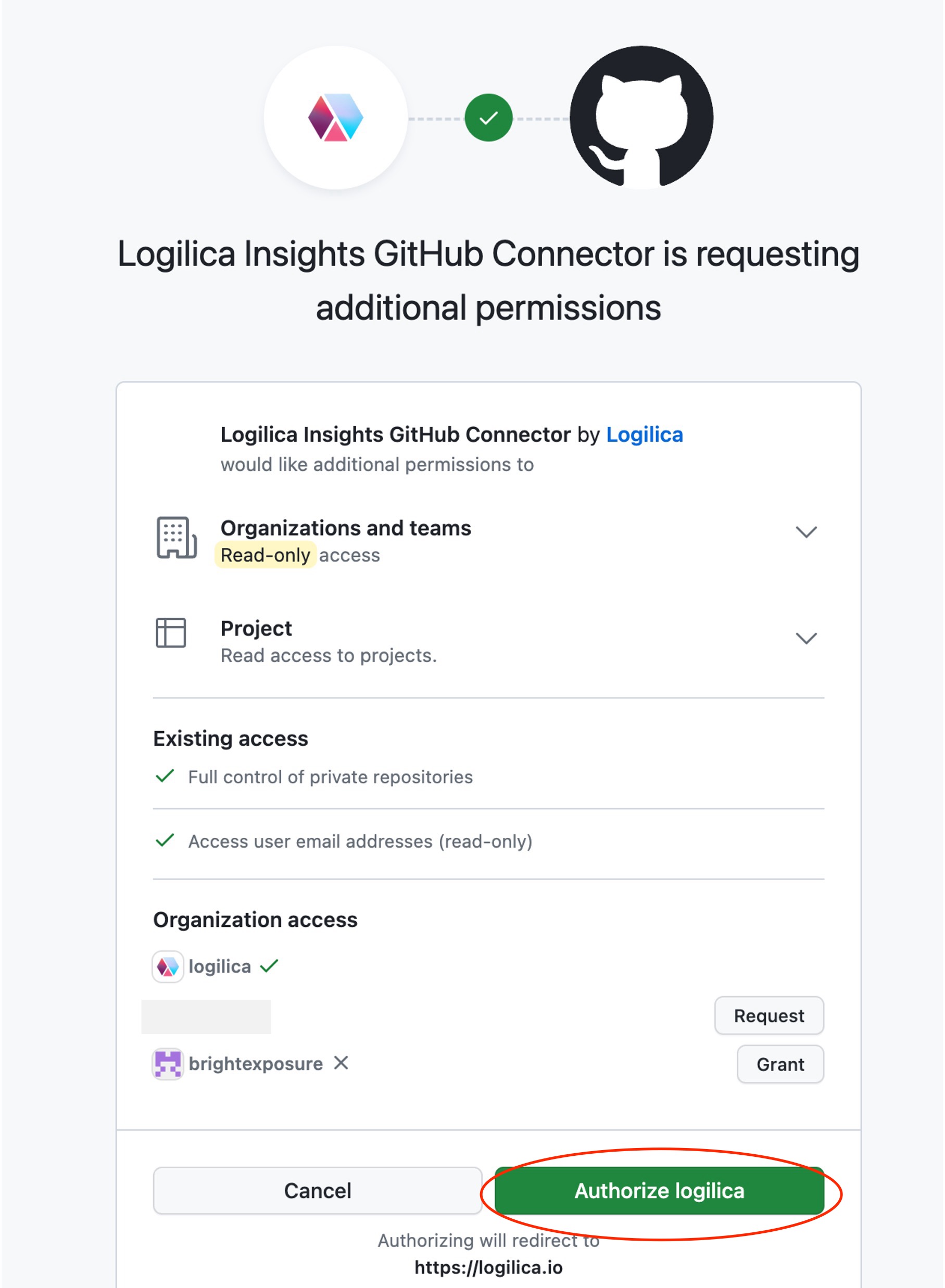
Example of OAuth authentication
Logilica will only read the relevant data and will have no write access to your data source. All OAuth authentication is done through your data provider without Logilica storing any passwords.
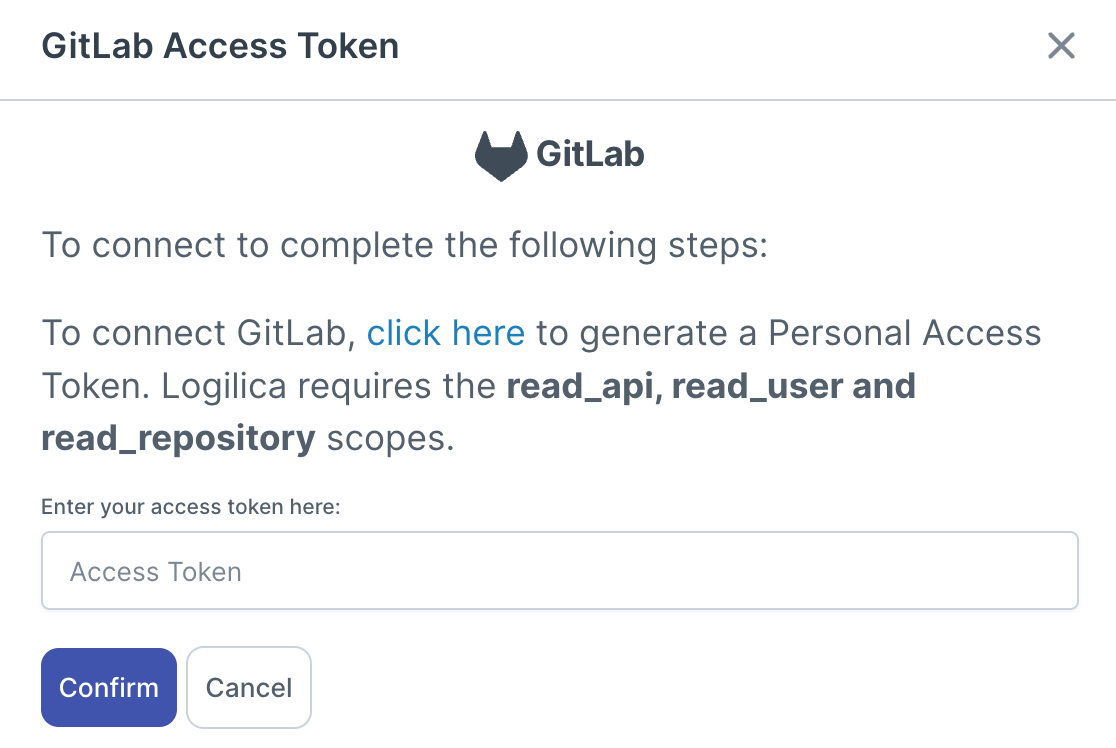
### Token-Based Access
Logilica supports access tokens where the data provider does not support OAuth or where additional token-based access is required.
## Connector Settings
Some connectors have additional settings that control what data is imported. For example, GitHub and GitLab connectors include toggles for:
* **Build information** — import CI/CD data (GitHub Actions, GitLab Pipelines)
* **AI usage data** — import GitHub Copilot metrics
* **Code scanning** — import SARIF security findings
* **Team synchronization** — sync platform teams as Logilica teams
These settings are available on the connector's configuration page after installation.
## Good to Know
* **First import covers the last 6 months.** Only data updated within the last 6 months is imported on the first scan. Older data that hasn't been touched won't appear. Importing data older than 6 months requires a configuration change by Logilica — contact support.
* **CI build history imports the last 1000 runs** per repository at initial onboarding. Future runs are added automatically.
* **Issue tracker connectors share a common data model.** Regardless of whether you use Jira, GitHub Projects, Azure DevOps Boards, GitLab Issues, or YouTrack, Logilica maps all planning data into a unified model with consistent state categorisation (To Do, In Progress, Done). See each issue tracker's connector page above for its platform-specific mapping rules.
## Questions?
If you cannot find your preferred data source or have trouble connecting, reach out to us at as we may support additional data sources as part of our enterprise plan or in closed beta.